

Dispatch Notes from Barcelona
On Catalan, Spanish for beginners, cognitive load, holy multilingualism & paperback news
The paperback of MTT is out TODAY in most of the world with a May 2026 distribution date in North America! You can order it here or anywhere you get your books. Head to your local indie shop or even request it at your library — anything and everything helps. Thank you to everyone who made this happen at Footnote Press and PFD and to all the readers and reviewers. If you have a couple of minutes to spare, please leave a review here or here (even if you purchased the book elsewhere). It all helps people see the book, read it and hopefully feel less alone in their multilingual journeys and in raising multilingual children. (P.S. It makes a great Mother’s Day present and dare I say even a beach read that is lightweight and portable!)
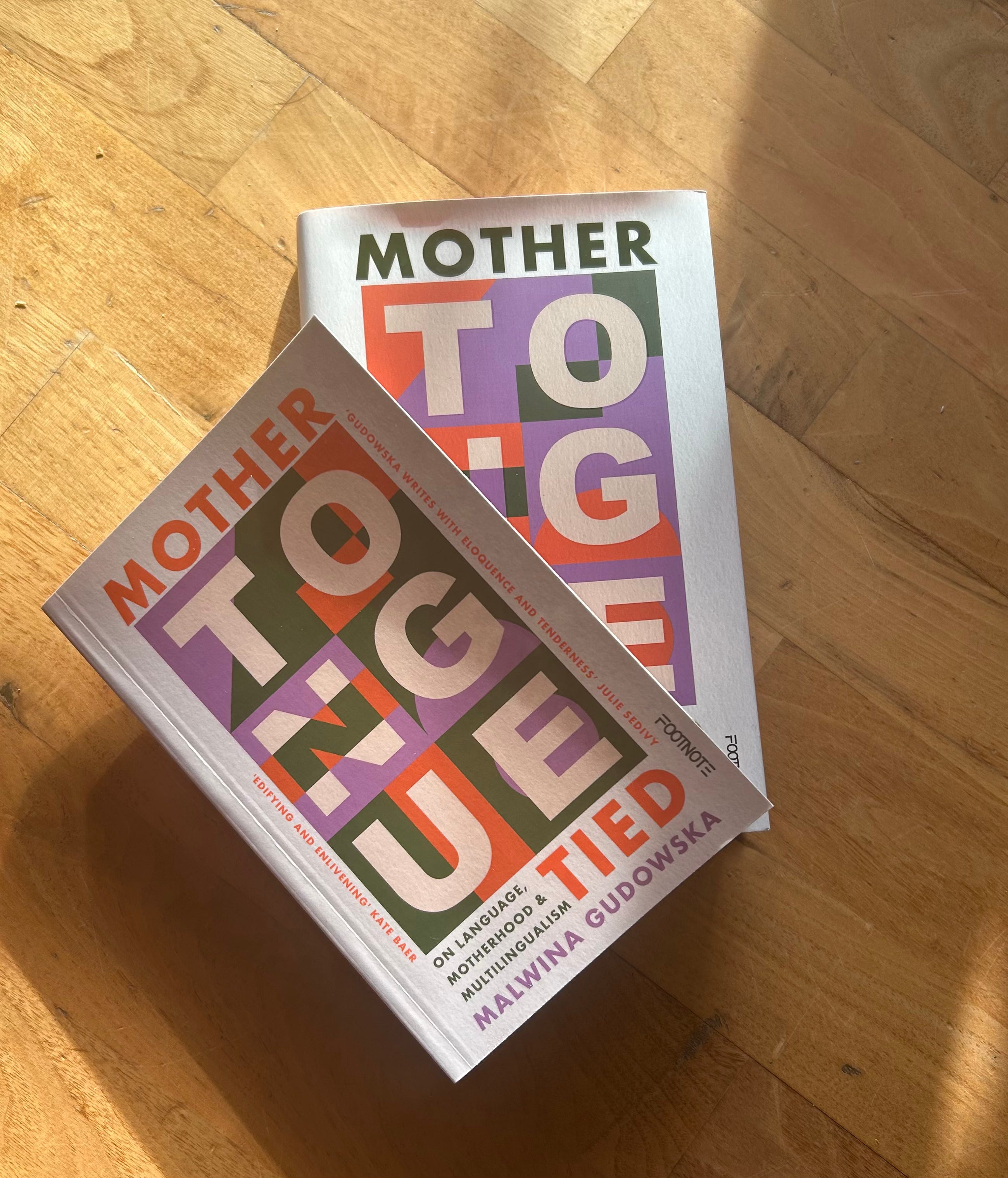
And now, a dispatch from Barcelona, where I was with my family for a few days this past weekend. Or rather, some random thoughts as we toured the city and ate our weight in tapas.
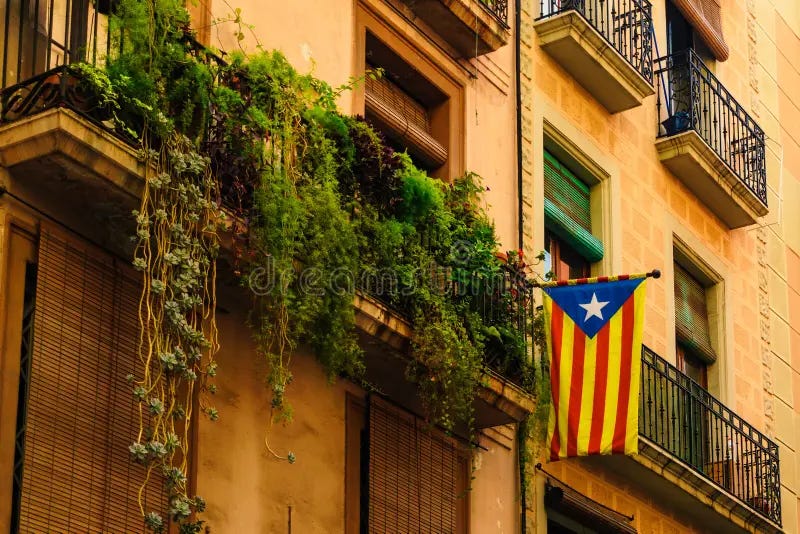
I wrote something about Catalan and Spanish here but to recap Barcelona, the capital of Catalonia, is officially bilingual (Catalan and Spanish). During Franco’s dictatorship, Catalan was repressed in public life, education, and government and it wasn’t until after the 1978 Constitution, that Catalan was restored as a co-official language in Catalonia. In Barcelona, both languages are official and widely spoken, but Catalan holds strong symbolic importance tied to regional identity and political autonomy. And yet, outside of Spain, Catalan is still often mistaken as a dialect of Spanish or, sometimes, not a language at all. Being in Barcelona reminded me of something a participant at my recent workshop on raising multilingual children shared. She said she was raising her daughter in Catalan (in London) and the little girl was fluent in the language. However, when she went to school and told her teacher she spoke Catalan at home, her teacher told her it was not a “real” language. As you can imagine it confused the little girl and angered the parents immensely and is another example of the battle certain languages, and the families who use them, have to fight daily.
Spanish for Beginners
I am a beginner Spanish speaker with decent pronunciation and can, for the most part, get by until someone responds in a long, super fast sentence. I have taken lessons on and off since university and after every trip to a Spanish-speaking place, I vow to get better. I am always so thankful for the people who, despite my beginner level, continue to speak Spanish to me even when I admit I am not fluent. Sometimes they go slowly so I understand or will repeat things until I say, “Sí, comprendo!” (I am thinking of you the wonderful girl at the Levi’s store and you, the lovely guy at the market who let us order even though you were closing in 20 minutes.) There are of course many other people who continue in English even when I go on in Spanish. In a few situations on this trip, a couple of people corrected my Spanish but still continued to respond in English. I mean, if you’re going to play teacher (in a rude way) at least keep the conversation alive in Spanish!
Cognitive Load of Simultaneous Interpretation
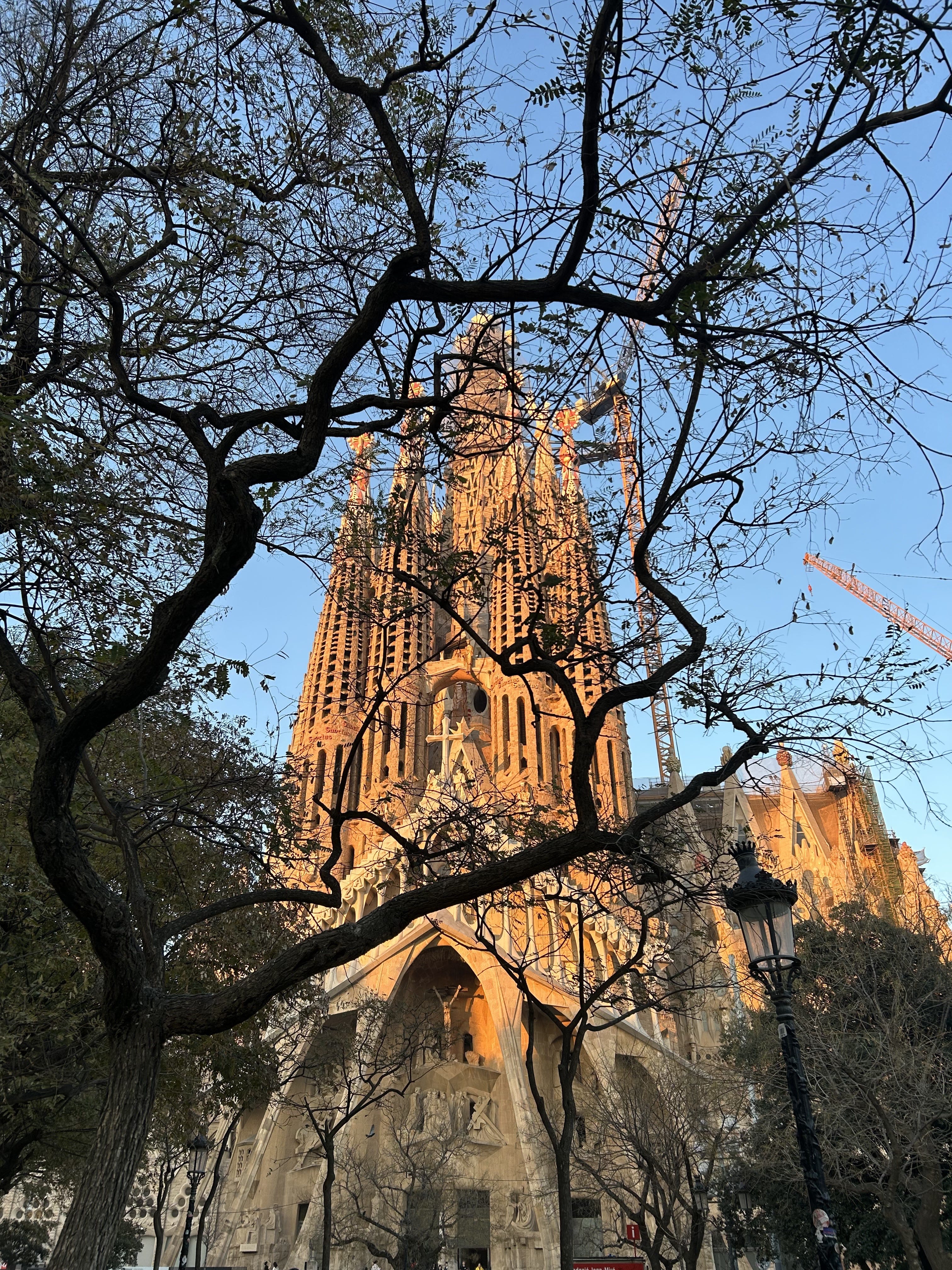
Related to my beginner Spanish, we did a bilingual tour of the incredible Sagrada Família. There were about 20 people, mostly Spanish speakers it seemed with a few English-dominant people like us. The guide was a young woman who grew up in Barcelona and speaks Spanish, Catalan, English, Urdu and Punjabi. Fluent in all five languages, Spanish is dominant for her compared to English but she fluidly moved between the two when telling us about the church, speaking quickly in both languages. Surprisingly, I found the bilingual tour overwhelming and had to even step back a few times. Maybe it was because I was trying to understand her in both languages, one being a very beginner language for me, my cognitive load was through the roof and I felt like my mind was on overdrive. It was as if my brain could not compartmentalise the two languages because they were coming from the same person and because she did not interpret line for line. By the time I tried to understand her in Spanish, she moved on to English. I am still figuring out why instead of acquiring more information through two languages, I felt like I lost most of what she said in both languages, one being my dominant one! I assume it is likely to do with not being proficient in Spanish but trying to understand the language and not being able to keep up and therefore, even missing what she said in English most of the time but will report back after I figure this out!
Holy Multilingualism
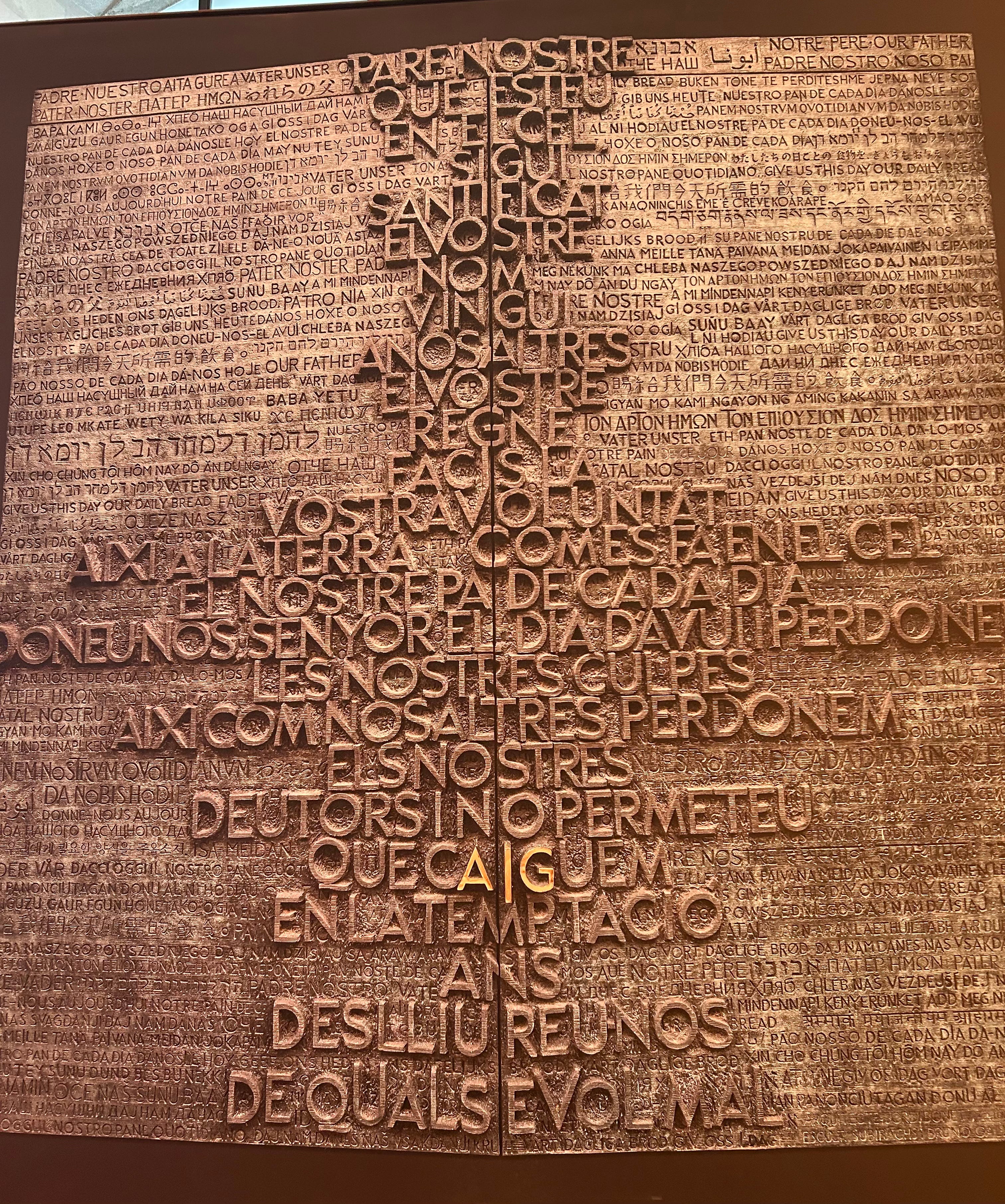
Sagrada Família is unlike anything I have ever seen before. It is magnificent and I could spend days devouring the symbolism at every turn. (Gaudí’s nods to nature are especially poignant.) Naturally, one of my favourite language-related parts of the church is on the main door to the Glory Façade, designed by Josep Maria Subirachs. The phrase “Give us this day our daily bread” is shown in 50 different languages with the central text in raised letters is the Our Father in Catalan. The door handles are in the form of the letters A and G for Antoni Gaudí.
Lingua Franca of “Lingua frankensteinia”1
Overheard in a Barcelona cafe, a conversation between two dominant North American English speakers discussing differences between Spanish, French and Italian:
“But everyone pretty much speaks English here."
“Yeah it’s awesome. That’s why they call it the lingua franca.”
“It’s like French in other parts of the world — that’s where lingua franca comes from.” (Said with such conviction despite its inaccuracy!)
Me: Ummmm, no, nope, no to all of this…
(Instead of saying anything, I just left the cafe but not before admiring the three posters saying, “coffee, please” in Spanish, Catalan and French.)
Thank you for reading.
Coined by Robert Phillipson to describe the detrimental, uncontrolled spread of English as a global language, acting as a “killer language” that displaces local languages and cultures.